


Is Icelandair Saga Premium Worth It? An Honest Review
Icelandair announces transatlantic business class sales several times a year, and the prices can be hard to beat. We’ve paid between $900 and $1,300 round trip from DC to Europe in Icelandair Saga Premium, including onward connections in Europe. But this is not a true business class product, because the seat doesn’t lie flat. We compare it to premium economy and think it provides great value with a few honest caveats. We’ll cover the seat, the food, the lounges, and everything you need to know before you book.
Quick Verdict: Is Icelandair Saga Premium Worth It?
Yes, but only at sale prices and with the right expectations.
Saga Premium is marketed as business class and comes with real business class perks: priority boarding, lounge access, printed menus, and pre-departure champagne. But the seat is not lie-flat. Think of it as premium economy done significantly better and sometimes for way less.
✅When we’d book it again
- when the round-trip fare to Reykjavik is under $1,100
- when the through-fare to Europe is under $1,500 round trip
- when we want lounge access, a great meal, and a priority experience without paying full business class prices
- when we’re planning a stopover in Iceland anyway
❌ When we’d think twice
- if you have a tight connection at Keflavik in winter
- if you need a lie-flat seat (the overnight is short, but this seat doesn’t lie flat)
- if the fare is close to what French Bee or another budget-premium carrier charges, since those are now competitive
We’ll tell you everything you need to know about the premium experience, seats, meals, lounge access, and more.
Heads up: Some links in this post are affiliate links. We may earn a small commission if you book or buy through them, which helps keep our website running at no extra cost to you.

What Saga Premium Perks Do You Actually Get?
Saga Premium is Icelandair’s most premium cabin, and it includes everything you’d associate with a business class experience: priority check in and boarding, lounge access at departure and layover airports, printed menus, pre-departure champagne, and elevated catering. The crew treats it like business class because it is in every way except there’s no lie-flat seat. You’ll also get:
- 2 checked bags (up to 70 lbs each)
- 1 carry-on bag (22 lbs) and a small personal item
We compare it to premium economy because that’s the more honest benchmark. But it outperforms every premium economy product we’ve flown, including United, American, Lufthansa, Azores Airlines, SAS, and French Bee (though many times we prefer flying French Bee direct to Paris from Newark).
The food and service on Icelandair Saga Premium are the true differentiators (more on that below).
One thing to know: There is no priority immigration lane at Keflavik for Saga Premium passengers. You’ll get priority boarding and security, but immigration at KEF is the same line for everyone. It does move very efficiently, even with tight connections. They’re hub-and-spoke model makes them ready to handle high volume in and out at the same time. At most European partner airports, you do get a fast-pass security lane with your Saga Premium ticket.
You can read more about Icelandair’s fare types and perks here (note that a Saga Premium Flex ticket has a few extra perks, but we generally wouldn’t shell out the extra cash for it.
Saga Premium Seats Review (737 vs 767)
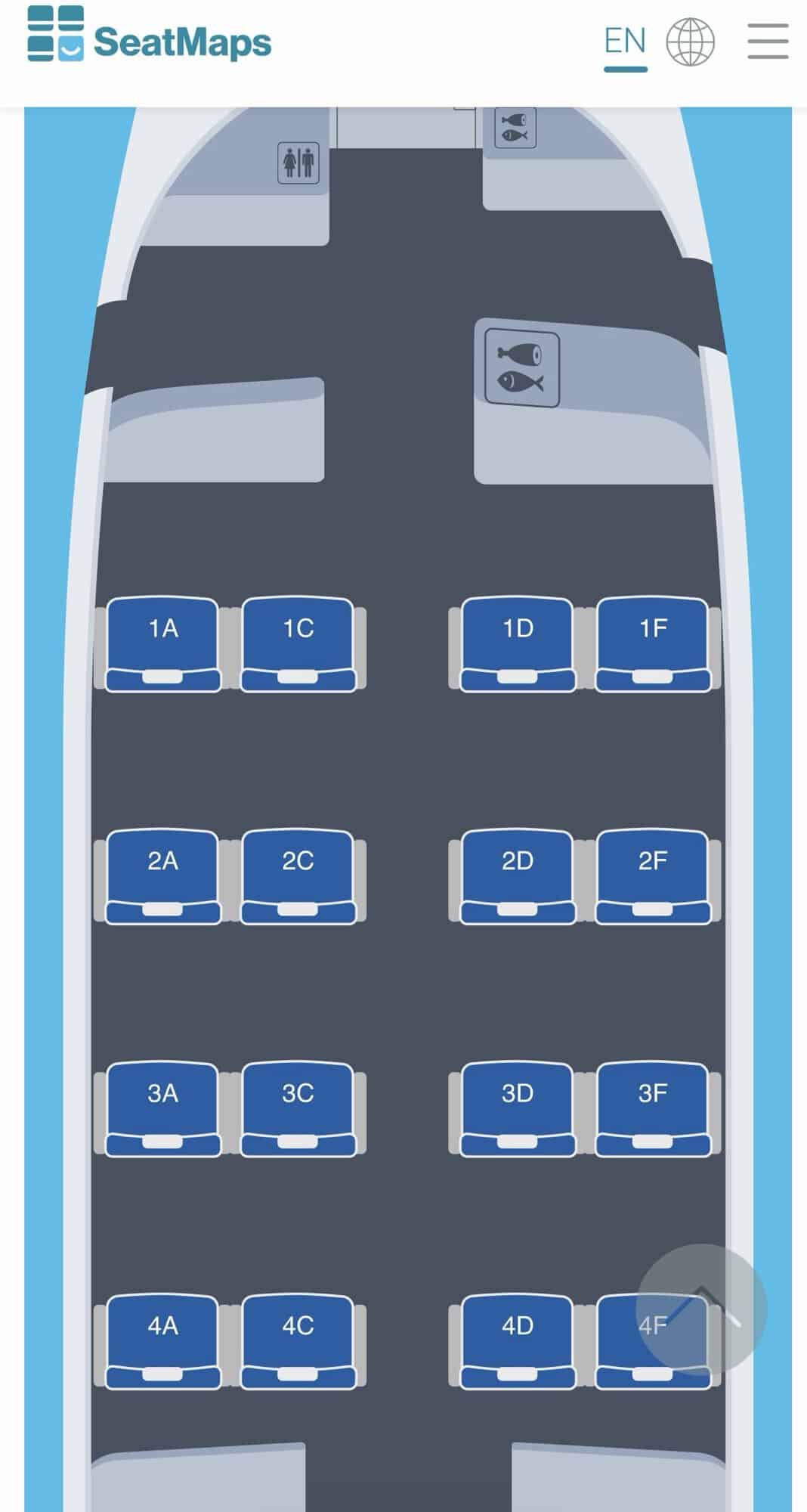
The configuration depends on which aircraft you’re on. On the Boeing 737 MAX 8 and MAX 9, which are most common on the DC-to-Reykjavik route, Saga Premium has 16 seats in a 2-2 layout. Pitch is 40 inches, width is 20.5 inches – both better than typical premium economy – and recline is 5 inches. The 767-300ER, which is used during peak season and longer routes sometimes, has 25 seats in a 2-1-2 layout with the same pitch and width, but 7 inches of recline. Tis model is great for more comfort or if you’re flying solo.
The footrest makes a real difference for shorter passengers. Window seats give you a wall to lean against on the overnight, which helps. If you’re traveling as a pair, the middle seats work well. Direct aisle access from every seat.
As we mentioned, the seat doesn’t go flat. If that’s a must for you, this isn’t going to be the right option for your trip. But the pitch, width, and overall comfort are noticeable better than the others we’ve flown. For comparison, United Airlines Premium Plus has a 38″ pitch, 18.7″ width, but a better 6″ recline. 👉 United Airlines Premium Plus Review: Worth It to Europe?
Saga Premium Food Review
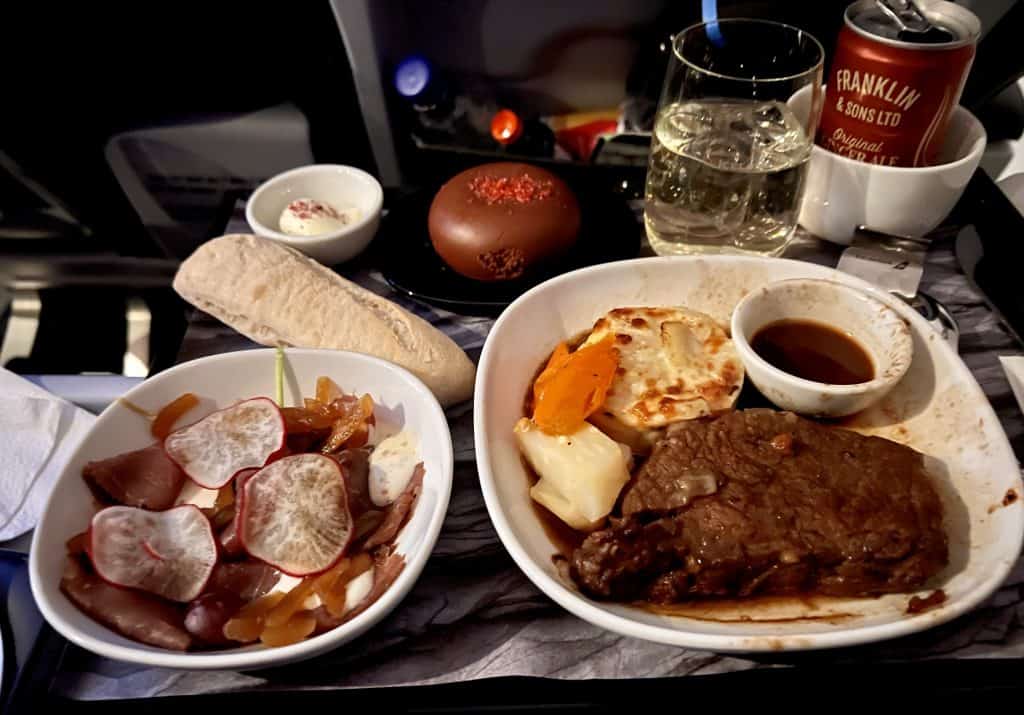
This is the best part of Saga Premium. In addition to pre-departure champagne, you’ll get printed menus, Nicholas Feuillatte champagne in flight), and several beautiful Icelandic courses on real dishware. We’ve had cold salmon with soba noodles, slow-roasted beef, artisan bread service, and chocolate mousse. We can confidently say the quality and presentation are consistent across flights, not just on one lucky leg.
One Big Negative for Icelandair
Flights from the US East Coast typically depart around 8 PM and take about 5.5 hours. The time difference to Reykjavik is only 4 to 5 hours depending on the season, so you land around 6 AM local time. Once you’ve had dinner and settled in, there’s not much flight time left to sleep. But we don’t recommend skipping the meal service to get more sleep time. The overnight is short either way, and the food is worth it. Just know that routing through Reykjavik generally means exhaustion on your first day or connection. We like sleeping in the loungers at the included Saga Lounge at Reykjavik KEF.


Saga Premium Amenities
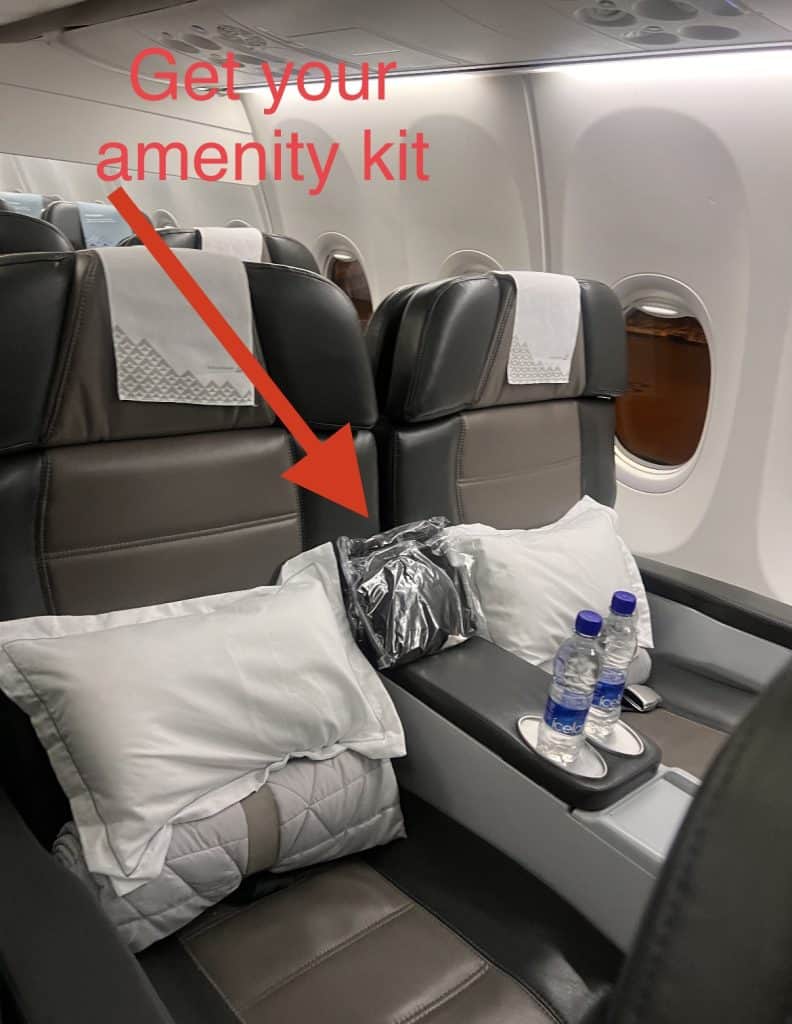
Amenity kits are waiting at each seat when you board, along with a bottle of water. The kits cover the basics with a dental kit, socks, eye mask, and a couple of lotions. It’s nothing elaborate, but everything you’d actually use on an overnight flight or layover.
The blanket is thick and the pillow is substantial enough to make the setup comfortable for sleeping (even if you only get 2 hours of sleep). The forward lavatories are reserved for Saga Premium passengers, which means no economy traffic and no line. This can make a real difference on a red-eye.
Lounge Access with Icelandair Saga Premium
Saga Premium includes lounge access at departure and layover airports, and the quality is better than you’d expect for this price point. From Dulles, we had access to the Air France/KLM lounge, which includes Taittinger champagne and some great small plates.
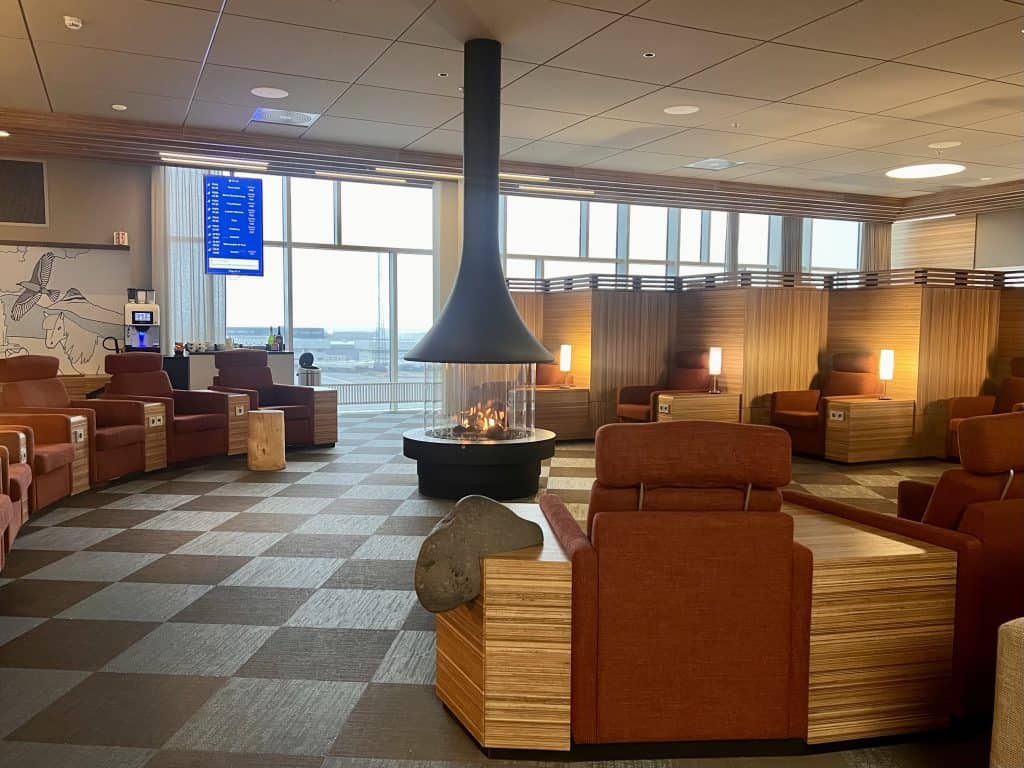
At Keflavik, the Saga Lounge is large, comfortable, well stocked, and has showers, which matters a lot on a long layover after an overnight flight. On our Oslo itinerary, we had a 4 to 5 hour layover and managed to sleep comfortably in the lounge recliners and shower before our connection.
👉 Best Lounges at Washington Dulles Airport and How to Get In
What Does Icelandair Saga Premium Cost?
Icelandair runs sales throughout the year, and the deals move fast. We’ve booked direct flights from Washington Dulles to Reykjavik for as low as $900 round trip in Saga Premium. Onward connections to cities like Oslo and Paris have come in between $1,200 and $1,300 round trip. For comparison, premium economy on carriers like United or Lufthansa often run $1500 to $2,500 or more on transatlantic routes.
We use flight deal alerts to catch the sales. For example, Daily Drop has sent excellent Icelandair sale alerts that have made the $100 annual fee worth it. The direct-to-Reykjavik fares come up most often. European connections are worth watching if your schedule is flexible. We built a whole trip around the Oslo fare deal we got, and had a wonderful trip.
Pro Tip: If you’re considering a split itinerary by flying Saga Premium to Reykjavik, then a budget carrier onward, make sure you run the numbers first. Budget fares from Keflavik tend to be pricier than from other European hubs, and flights can be 3+ hours. On our Oslo trip, the through-fare on Icelandair was cheaper than combining legs and included a real domestic first class cabin (most European airlines just block the middle seat in the first few rows of economy for intra-Europe flights and call that business class). You get a true premium experience intra-Europe with Icelandair Saga Premium. 👉 Is Business Class Within Europe Worth It? We Tested 4 Airlines
Keflavik Layover Tips
Every Icelandair itinerary connects through Reykjavik, which is either a minor inconvenience or a major bonus depending on how you plan it. For a short connection, the airport is efficient and the Saga Lounge handles the wait well. For a longer layover or a deliberate stopover there’s real opportunity here to add Iceland to your itinerary.
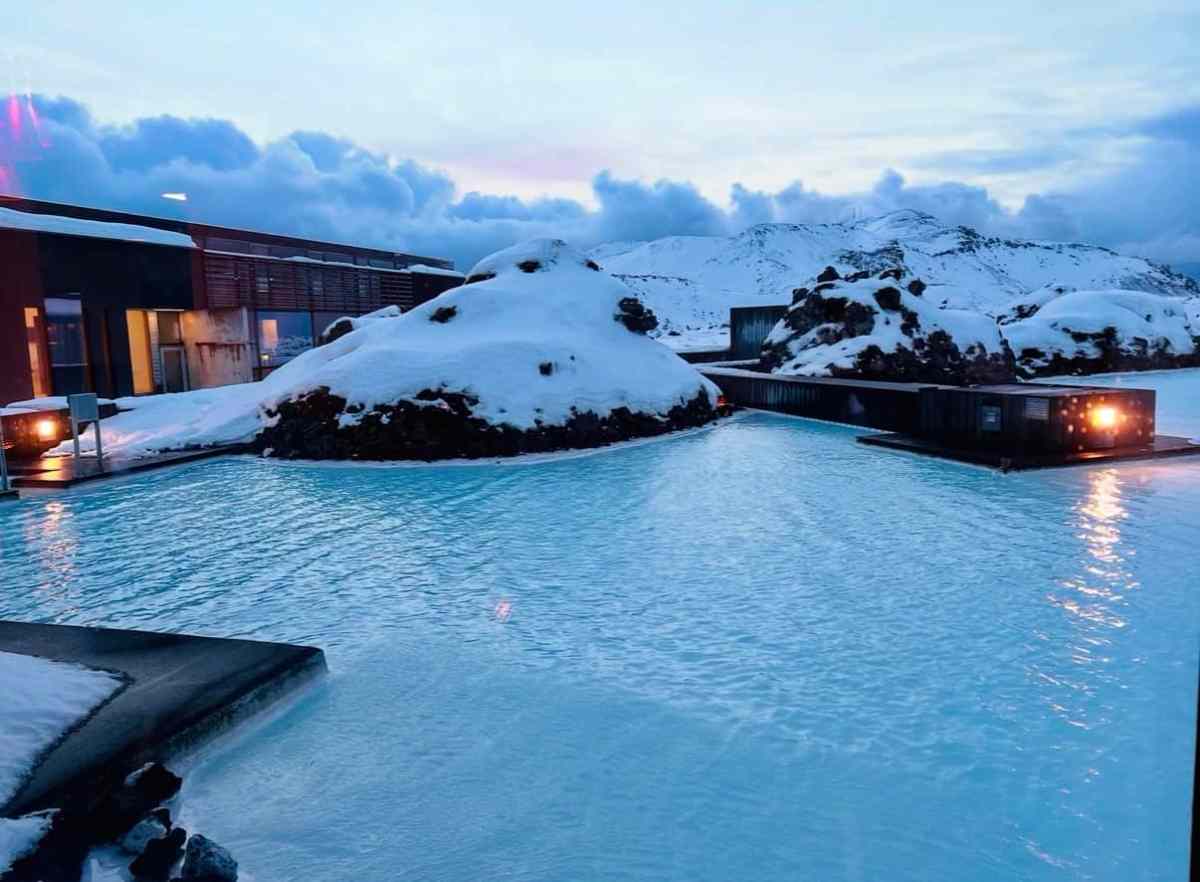
For a longer layover of at least 6 hours, consider booking the Blue Lagoon in advance. It’s close to the airport, easy to get to by private bus, and a great way to spend a few hours. The only problem is if your flight gets delayed, you may miss your time slot. The Blue Lagoon gets very busy and walk-ins are almost impossible (we only did this once on our first trip over a decade ago). You could also take the FlyBus into town, but give yourself an hour to commute each way plus another 90 minutes to get to your gate before boarding time.
Icelandair also has one of the easiest stopover programs in Europe. They let you add up to seven days in Reykjavik with no additional airfare (but you’ll have to pay for your accommodations, of course). 👉 How to Turn a Layover Into a Mini Vacation: 4 Best Stopover Strategies

Reykjavik Weather Delays
Keflavik gets morning fog, and winter delays can be expected. On one trip, all inbound US flights were held about 90 minutes. Icelandair handled it efficiently and the extra lounge time was fine by us. It’s worth knowing if you’re booking a tight onward connection. Icelandair handles it’s own tight connections very well, but build in a buffer if you’re continuing with a different airline or have a tour or activity booked on arrival.
👉 Best Reykjavik Itinerary: How to Spend 72 Hours in Iceland’s Capital
📊 Icelandair Saga Premium vs Other Premium Experiences
We’ve flown premium economy on six other carriers: United, American, Lufthansa, Azores Airlines, SAS, and French Bee. Icelandair Saga Premium is our top pick in this category, with French Bee close behind. The food and the lounge access are what put it ahead. The seat specs (40-inch pitch and 20.5-inch width) are competitive with or better than most of the others. The recline could be better on the 737 MAX 8 and 9, but overall the seats have a more premium fell than other premium economy products.
If your priority is sleep, but you also want a cheaper fare, look at French Bee Premium, which has a tighter pitch and width but a better recline and direct flights to Paris in the heart of Western Europe.
Icelandair Saga Premium FAQs
Is Icelandair Saga Premium business class?
Icelandair markets Saga Premium as its top cabin, and it comes with business class perks like priority boarding, lounge access, printed menus, pre-departure champagne, and dedicated forward lavatories. The one thing it doesn’t have is a lie-flat seat. We’ve flown it multiple times and benchmark it against premium economy rather than business class, because that’s the honest comparison. Think of it as premium economy done better, not a true lie-flat business class product. 👉 Cheap Premium Economy Flights to Europe: 3 Ways to Save Big
Is Icelandair Saga Premium worth it?
At sale prices, yes. We’ve paid between $900 and $1,300 round trip from Washington Dulles to Reykjavik and onward to cities like Oslo and Paris, which undercuts premium economy on United or Lufthansa on the same routes. You get lounge access, a fantastic meal, and a priority experience for the price of premium economy elsewhere. If the fare climbs higher than French Bee or another budget-premium carrier, or you need a lie-flat seat for the overnight, that’s when we’d think twice. 👉 French Bee Premium Economy Review: Everything You Need to Know
What is the seat like on Icelandair Saga Premium?
It depends on the aircraft. The Boeing 737 MAX 8 and MAX 9, most common on the DC-to-Reykjavik route, have a 2-2 layout with a 40-inch pitch, 20.5-inch width, and 5 inches of recline. The 767-300ER runs a 2-1-2 layout with the same pitch and width but 7 inches of recline, so it’s the more comfortable option if you can find it. Neither seat lies flat. The pitch and width beat most premium economy products we’ve flown but the recline is less. You can compare to other airlines in premium economy here 👉 Best Premium Economy to Europe Ranked Worst to Best
Is the Icelandair overnight flight long enough to sleep?
Not really. Flights from the US East Coast are about 5.5 hours, and with the time difference, you land in Reykjavik around 6 AM local time. Once dinner service wraps up, there’s little flight time left. Plan to sleep at your destination or in the Saga Lounge at Keflavik rather than counting on rest in the air.
Does Icelandair Saga Premium include lounge access?
Yes, at both departure and layover airports. From Washington Dulles we used the Air France/KLM lounge and enjoyed Taittinger champagne and small plates. At Keflavik, the Saga Lounge is large and well stocked, with welcomed showers on a layover during a long haul. On a longer layover we slept in the lounge recliners and showered before the onward connection. 👉 Best Lounges at Washington Dulles Airport (IAD) + How to Get In
How much does Icelandair Saga Premium cost?
We’ve booked direct Washington Dulles to Reykjavik fares as low as $900 round trip, with onward connections to Oslo and Paris between $1,200 and $1,300. By comparison, premium economy on United or Lufthansa often costs $1,500 to $2,500 on transatlantic routes. The catch is that Icelandair Saga Premium is only worth it if you book during one of their sales, which they hold several times a year. So watch for those.
Looking for a Place to Stay in Reykjavik? Start Here!
Read More of Our Airline Reviews
- United Premium Plus vs Lufthansa Premium Economy: Which Wins?
- Is SAS Business Class Worth It? An Honest Review
- Upgrade to SAS Business Class: A Complete Guide to Bidding for the Best Value
- Aer Lingus Business Class Review: Is It Worth It?
- Is Turkish Airlines Business Class Worth It?
- Economy vs. Premium Economy for International Flights: Which Is Worth It?